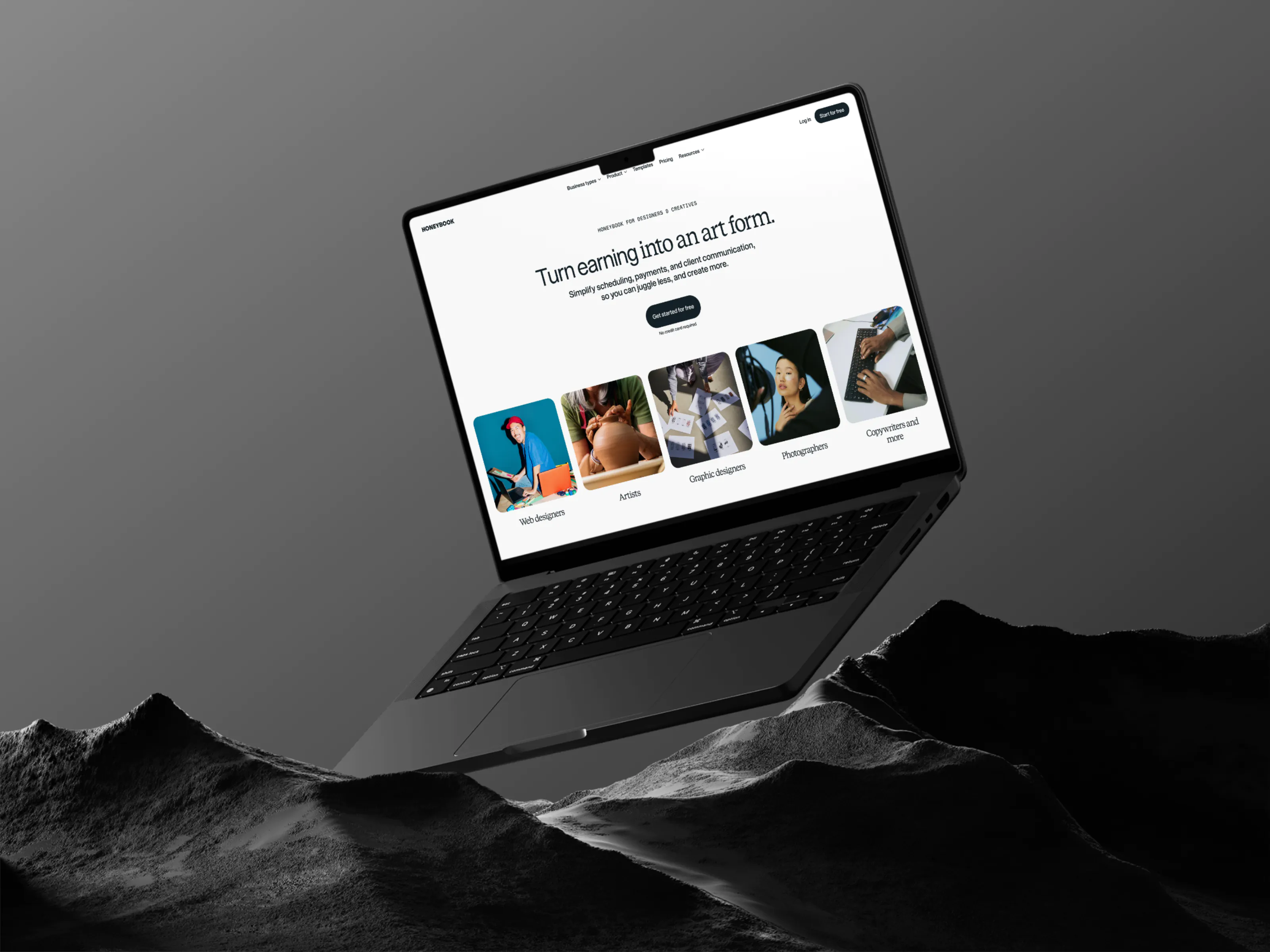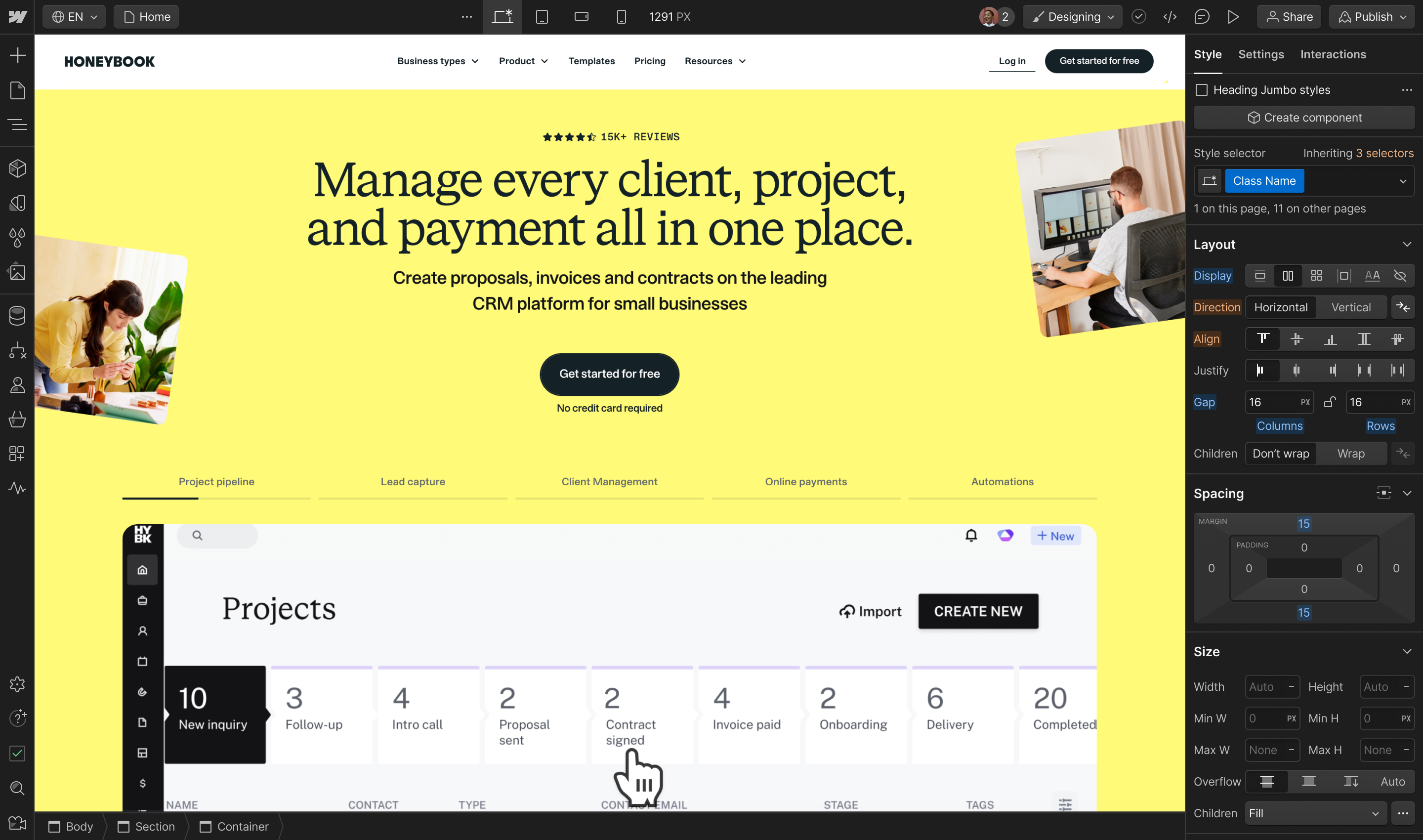

HoneyBook needed more than a new website — they needed scalable web infrastructure that could power multiple properties while giving their marketing team full control over publishing. I built a global Webflow component library that serves as the single source of truth across eight HoneyBook sites.
HoneyBook's web presence had outgrown its infrastructure. Their marketing site ran on Gatsby, which meant every update — even a copy change — required a developer, a code review across time zones, and a weekly deploy window on Sundays.
The marketing team had ideas. They had campaigns to launch, landing pages to ship, content to publish. But they were bottlenecked by a platform that treated every change as a development task.
Meanwhile, HoneyBook's web footprint was expanding. Beyond the core marketing site, they needed campaign and landing pages, a templates gallery, a pros marketplace, a podcast site, and brand guidelines — all sharing the same visual language but living as separate web properties.
They didn't need a redesign. They needed a platform migration and a new operating model for the web — one built on a scalable Webflow component system.
Gatsby to Webflow migration — not a lift-and-shift. The engagement started with a full platform migration from Gatsby to Webflow. But this wasn't a simple rebuild — it was a chance to rethink how the entire multi-site web ecosystem was architected. Rather than build eight independent Webflow sites, I designed a multi-site architecture around a single global component library: one Webflow project containing every building block the team would need, shared across all eight properties through Webflow's shared library system.
A design system built for scale. Every component was designed in Figma and developed in Webflow as a fully customizable building block, with variants for background colors, layout options, and configurable properties — giving the team flexibility without sacrificing brand consistency. It wasn't just a component library. It was a complete design system: 190 components and 162 variables defining how HoneyBook shows up on the web, with spacing, color, typography, and layout patterns all governed by tokens and variables, editable by the team without touching code.
Phased delivery. I worked with HoneyBook to prioritize pages by impact rather than launching everything at once. All P0 and P1 pages launched with the initial release — one month after kickoff. P2 pages followed in a second phase post-launch. V1 was live within four weeks; the full engagement wrapped in three months.

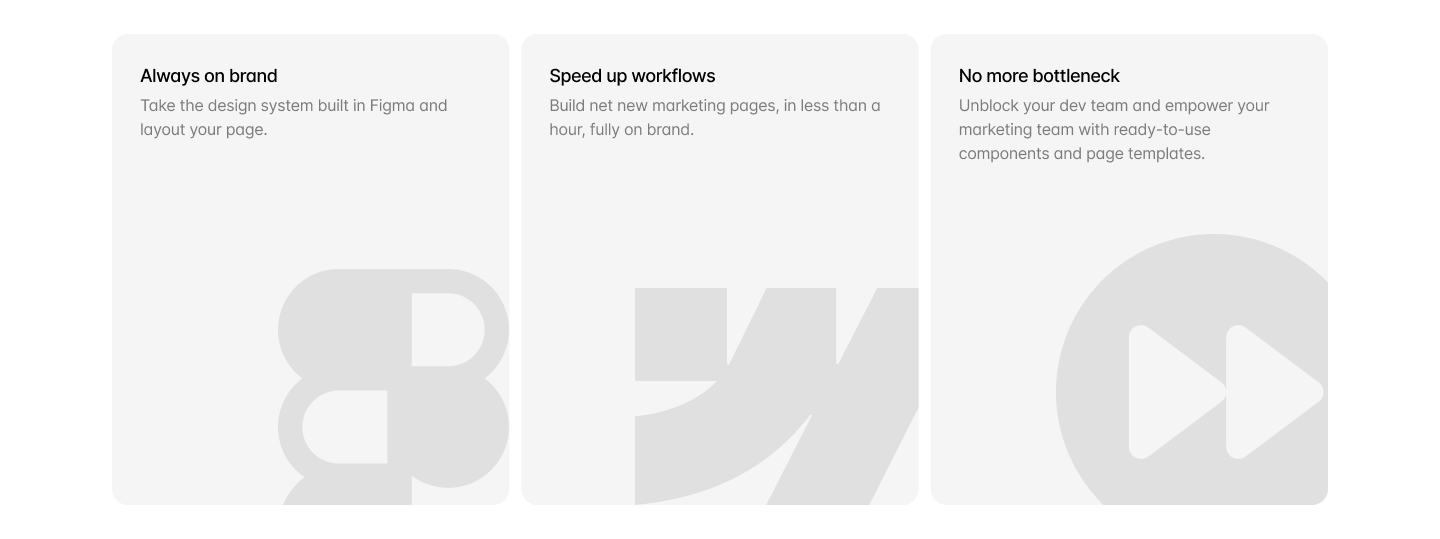
Eight Webflow sites powered by one global shared library: HoneyBook's core marketing site, campaign and landing pages, templates gallery, pros marketplace, podcast, brand guidelines, SEO landing pages, and company news. Every site pulls from the same component library — update a component once, and it cascades everywhere. One design system, one source of truth, eight sites speaking the same visual language.
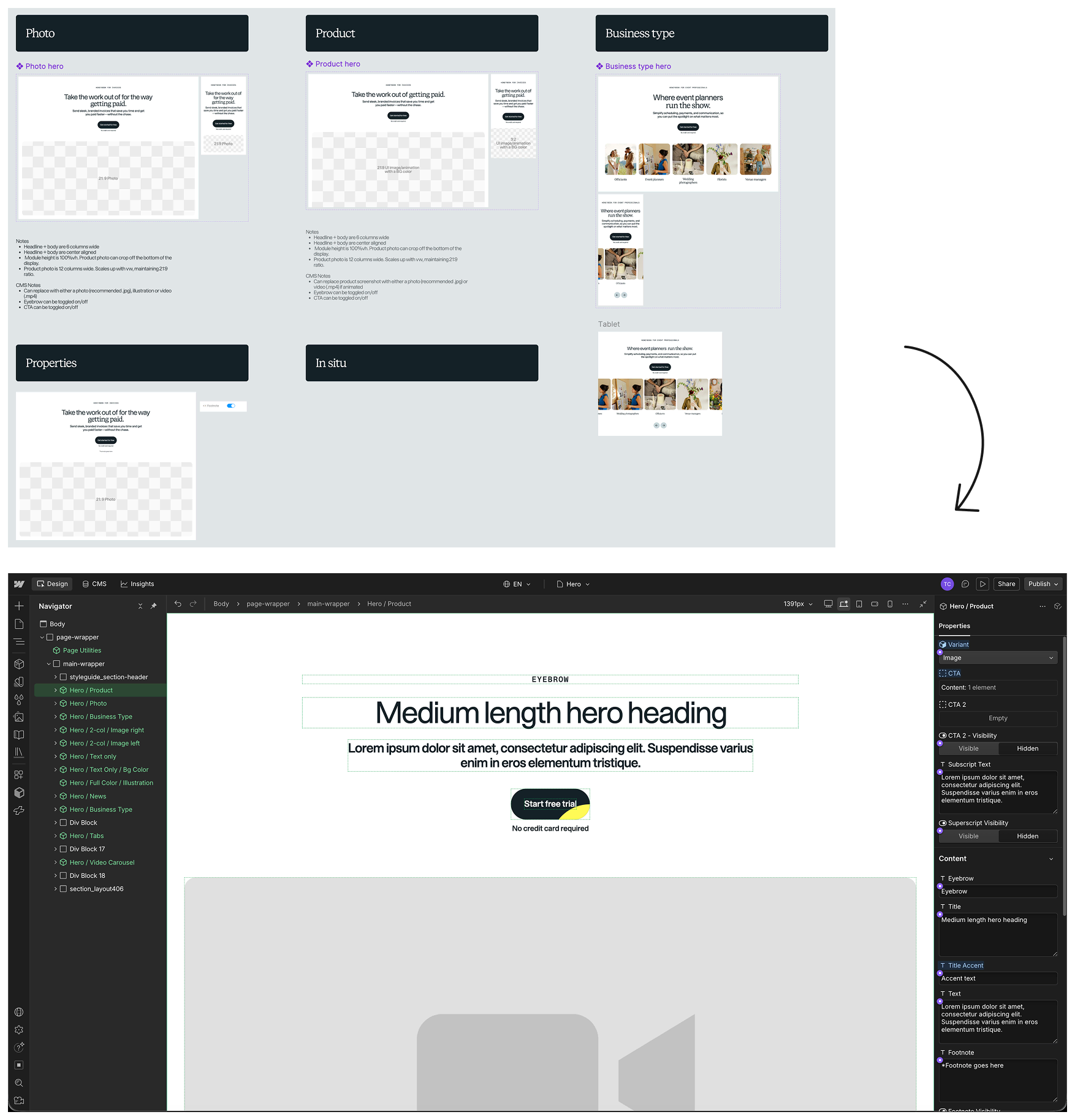
190 components built with variants, properties, and configuration options, from hero sections and pricing cards to navigation, footers, and CMS-driven layouts. 162 variables governing color, spacing, typography, and layout across every property — a token-based foundation that makes the system evolvable, not just consistent.
I built the library in partnership with HoneyBook's designer, who owned the brand redesign, and translated that vision into a scalable Webflow system the entire team could operate independently.


The transformation wasn't just technical — it changed how HoneyBook's team works day to day.
Before: every update required a developer, a code review across time zones, and a weekly deploy window. A new page meant days to weeks of waiting. Developer dependency was the bottleneck.
After: a non-technical marketer can build a complete page in under an hour. A technical team member can do it in under 30 minutes. Self-serve publishing, anytime — no code reviews, no deploy windows, no developer dependency.
The Webflow design system I built didn't just give HoneyBook a new website — it gave their marketing team back their independence.